


How to Master Match-3 Games: Tips and Tricks for Every Level
Match-3 games look simple on the surface — swap two tiles, make a row of three, repeat. But anyone who has hit a wall at level 150 knows there's a lot more going on beneath that cheerful exterior. The gap between a player who breezes through levels and one who burns through five lives on the same board comes down to strategy, not luck. These tips will help you close that gap.
Understanding the Core Mechanics
Match-3 games are built on a foundation of tile swapping, cascades, and chain reactions. Understanding how these systems interact is the single biggest leverage point for improving your results.
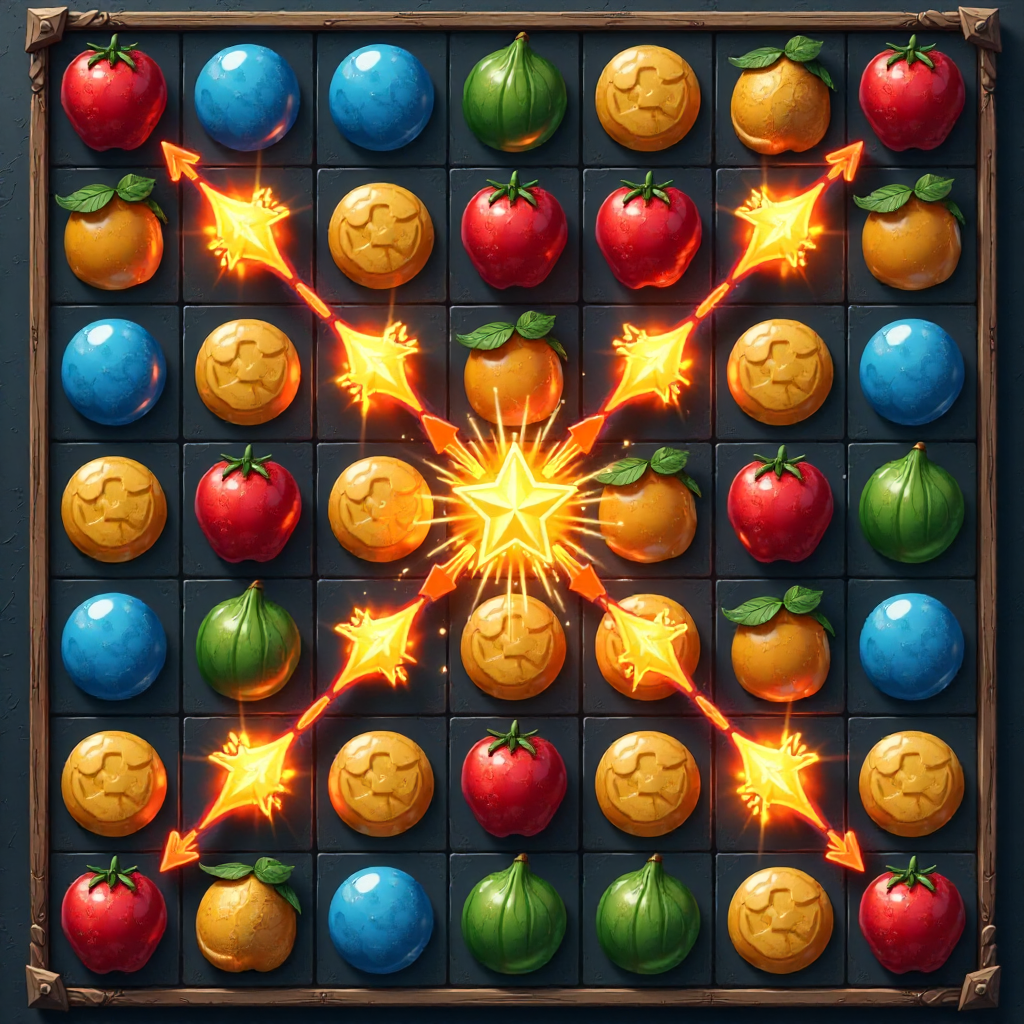
At the most basic level, you swap two adjacent tiles to form a horizontal or vertical line of three or more identical pieces. Match three and they disappear. Match four or five, and something more interesting happens: special tiles are created — bombs, rockets, color blasters, and other power-ups that clear large sections of the board in one move.
Cascades are where real power comes from. When tiles disappear, the pieces above fall down to fill the gap. If those falling tiles happen to form new matches, you get a cascade — a chain reaction that clears multiple groups without spending an extra move. Skilled players actively set up cascades rather than waiting for them to happen by accident.
Obstacle types add another layer: ice blocks that require multiple hits, locked tiles that can't be moved, and various blockers that restrict which pieces you can access. Recognizing these early changes how you approach the entire board.
Always Scan the Board Before You Move
The single most impactful habit you can build is pausing to scan the full board before making any move. Most players grab the first match they see — and that reactive approach is exactly what keeps them stuck.
Spend three to five seconds looking at the entire board before touching anything. Ask yourself:
- Does any move create a four- or five-tile match instead of just three?
- Is there a move in the bottom half of the board that could trigger a cascade higher up?
- Which area has the most clustered tiles of the same color, suggesting a power-up is close?
- Does any move directly progress the level objective?
Moves near the bottom of the board tend to be more valuable because they cause more pieces to fall and increase the chance of accidental cascades. This isn't a rule to follow blindly — sometimes the top of the board is where the action needs to happen — but it's a useful default when two moves look equally good.
Pattern recognition gets faster with practice. After a few hundred levels, you'll spot a potential L-shaped combo or a cross-shaped bomb setup almost instantly. That speed comes from training your eye to look for it deliberately, not from playing faster.
Prioritize Level Objectives Over High Scores
Every match-3 level has a specific win condition, and chasing points instead of that condition is one of the most common ways players waste moves. Read the objective before the first move, then build every decision around it.
Common level objectives include:
- Clear jelly or frosting — requires matches directly on top of affected tiles
- Collect specific items — ingredients or characters that need to reach the bottom of the board
- Reach a target score — here, combos and cascades matter more than efficiency
- Remove blockers or obstacles — requires matching adjacent to locked or iced tiles
If the goal is to clear jelly from the bottom corners, making matches in the center might feel productive — but it's often irrelevant. Focus your moves where the objective actually lives on the board. A move that scores 500 points but does nothing for the win condition is weaker than a move that scores 100 points and clears a critical blocker.
This mindset shift — from "what scores most?" to "what wins fastest?" — is what separates efficient players from players who run out of moves one or two tiles short of victory.
How to Create and Chain Special Tiles
Special tiles are the most powerful tools in any match-3 game, and creating them deliberately — rather than stumbling into them — is a core skill. Matching four tiles in a line typically creates a directional rocket or striped tile; matching five in an L or T shape creates a bomb; matching five in a straight line often creates a color blaster that removes every tile of one color from the board.
Creating one power-up is good. Combining two is where things get explosive. Most match-3 games allow you to swap two special tiles together, triggering both effects simultaneously. Common combo chains and their results:
- Bomb + Bomb — clears a massive area around both tiles
- Rocket + Rocket — fires both a row and a column clear at once
- Color Blaster + Any Power-Up — converts all tiles of a color into that power-up, then detonates them all
- Bomb + Rocket — clears rows, columns, and surrounding tiles in one chain reaction
The color blaster combination is particularly devastating on boards with a lot of one color. Saving a color blaster until the board is saturated with a single hue — then combining it with a bomb — can clear 60–70% of the board in a single move. That's not luck; that's timing.
Managing Moves, Lives, and Boosters Wisely
Resource management in match-3 games is about knowing when spending is worth it and when it's waste. Boosters are finite, lives refill slowly, and extra moves cost premium currency — so treating them carelessly is expensive over time.
A few principles that hold across most titles:
- Don't use boosters on levels you haven't attempted yet. You don't know what the board looks like or where the difficulty actually sits until you've played it at least once.
- Save pre-level power-ups for genuinely hard levels — ones where you've failed two or three times and can identify exactly where the problem is.
- When you're down to your last few moves and close to winning, evaluate whether the extra-moves purchase makes sense. If you need three more moves and you're two tiles from clearing the objective, it might be worth it. If you need ten more moves, it probably isn't.
Lives management is simpler: when you run out, stop. Playing frustrated and impatient leads to worse decisions, not better ones. Use the wait time to think about what went wrong on the level rather than immediately restarting the moment lives refill.
Dealing with Hard Levels Without Spending
Hard levels are beatable without in-app purchases in the vast majority of cases — they just require a different approach than the levels before them. When you're stuck, the answer is almost never "spend money"; it's usually "change strategy."
Start by diagnosing why you're losing. Are you running out of moves? That suggests you're not creating enough special tiles or you're making moves that don't contribute to the objective. Are you close but just short? That's a timing problem — you're saving power-ups too long or using them in the wrong order.
Practical tactics for breaking through difficult levels:
- Target the hardest-to-reach obstacles first. Corner tiles, deeply buried blockers, and tiles surrounded by ice need the most moves to clear — prioritize them early while you have more options.
- Look for moves that create special tiles near the problem area rather than clearing easy matches elsewhere.
- Accept that some levels have a luck component. Board layouts are partially random, and occasionally the starting configuration just doesn't give you what you need. A fresh attempt can produce a more workable board.
- If a game offers daily free boosters or rewards, collect them consistently. A stockpile of rockets and bombs built over a week makes a hard level much more approachable.
Patience is a genuine strategy here. Waiting 24 hours and returning with a clear head produces better results more often than grinding through ten frustrated attempts in a row.
Building Good Habits for Long-Term Progression
Long-term improvement in match-3 games comes from consistent habits, not marathon sessions. Short, focused play sessions — 15 to 20 minutes at a time — tend to produce better decisions than hour-long grinds where fatigue sets in.
The habits that compound over time:
- Always read the objective before the first move — every time, without exception
- Scan the full board before each move, not just the area you're focused on
- Collect daily rewards and free boosters on a consistent schedule
- After a failed level, spend 30 seconds thinking about what went wrong before trying again
- Practice identifying power-up setups even on easy levels — treat them as training ground
Pattern recognition is the skill that transfers most broadly across different match-3 titles. The specific mechanics vary — some games use a time limit instead of a move limit, some have unique obstacle types — but the underlying logic of cascades, combo chaining, and objective prioritization applies everywhere. Build that thinking in one game and you'll find yourself ahead of the curve in any new match-3 title you pick up.
Mastery in this genre isn't about playing more hours. It's about playing more deliberately. Every move is a decision, and treating it that way — even on the easy levels — is what separates players who plateau from players who keep progressing.
Frequently Asked Questions
What is the best first move in a match-3 game?
The best first move targets the bottom of the board and creates a four- or five-tile match if possible. Moves at the bottom cause more cascades as tiles fall from above, and special tiles near the objective area are almost always more valuable than matches elsewhere on the board.
How do I create a color bomb or equivalent super power-up?
Color bombs (or color blasters) are created by matching five tiles of the same color in a straight line. The key is setting up the board so that fifth tile is one swap away — often by making adjacent matches that shift tiles into alignment rather than trying to force a five-in-a-row from scratch.
Should I use boosters on easy or hard levels?
Save boosters for hard levels — specifically ones you've already failed at least twice and where you can identify a specific bottleneck. Using a booster on an easy level is almost always wasted potential. Collect and stockpile them during straightforward stages.
Why do match-3 games get harder after a certain point?
Most match-3 games use a difficulty curve that introduces new obstacle types and tighter move limits as you progress. Around levels 50–100 and again around 200+, many titles add layered blockers, multi-hit ice, and more complex board layouts that require deliberate combo strategies rather than reactive matching.
Are there universal strategies that work across different match-3 titles?
Yes. Scanning the board before each move, prioritizing the level objective over score, creating and combining special tiles, and targeting hard-to-reach obstacles early are strategies that apply across virtually every match-3 game. The specific power-up names and obstacle types differ, but the underlying strategic logic is consistent across the genre.