
How Game Developers Keep Players Engaged
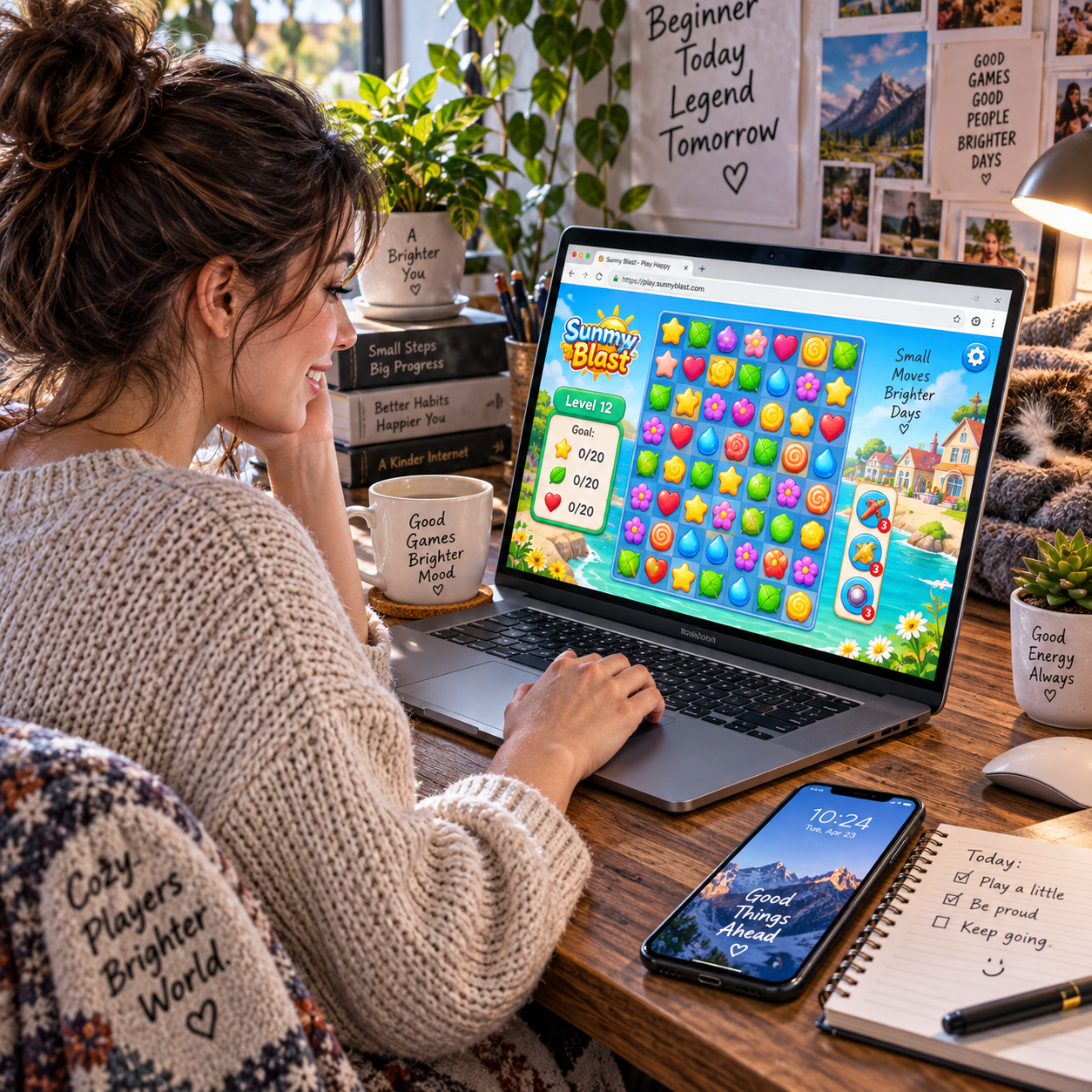
Casual games are easy to pick up, but the best ones give players a reason to come back: each session feels enjoyable, progress feels real, and the next step is clear. Game developers build that experience through gameplay loops, progression systems, rewards, balanced difficulty, and fresh content.
Good engagement does not mean keeping someone on a screen for as long as possible. It means making play worthwhile while respecting a player’s time and choices. Here is how thoughtful design helps casual games stay inviting rather than exhausting.
What Player Engagement Means in Casual Games
Player engagement in casual games is the mix of enjoyment, meaningful progress, and a player’s choice to return. It reflects whether a game feels satisfying to play, not simply how many minutes it stays open.
A person might enjoy a quick word puzzle during a break, then return the next day because they like solving it. Another player may care about completing a collection or improving at a familiar matching game. Both are engaged for different reasons.
Developers can look at signals such as completed sessions, repeated play, and player feedback, but those numbers need context. A spike in playtime can come from a genuinely fun event; it can also reflect confusing menus or a task that takes too long. Healthy engagement comes from player value: the game offers a pleasant experience, and the player decides whether to continue.
This distinction shapes good design. A clear stopping point, a save feature, or a short level can make a game more considerate. Those choices may shorten one session, yet build trust that makes a return visit feel welcome.
Build a Gameplay Loop That Feels Rewarding
A rewarding gameplay loop gives players a clear goal, satisfying actions, and a visible outcome. When those pieces work together, even a short session can feel complete.
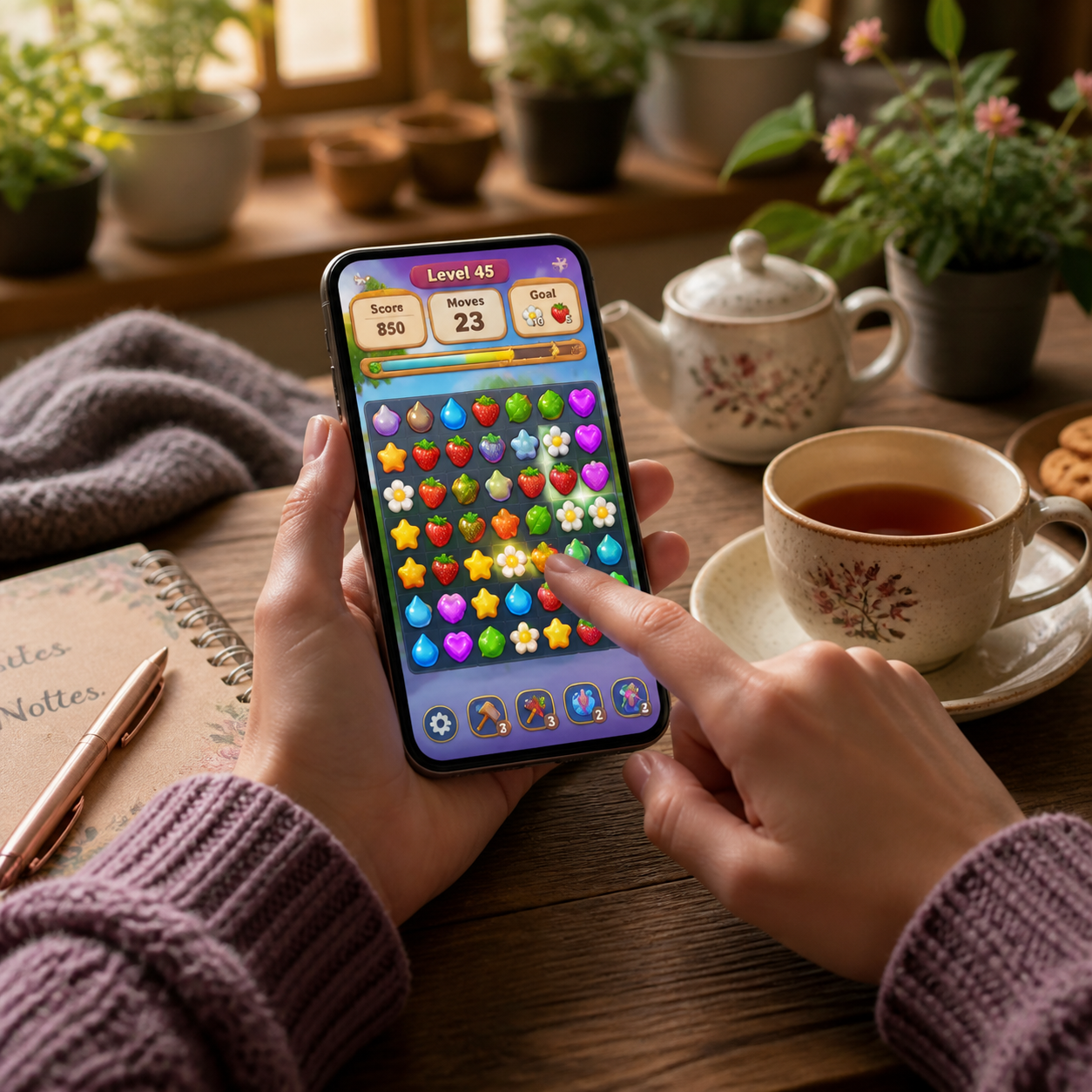
Consider a casual match-three game. The player sees a goal, swaps pieces to make matches, then watches the board respond with a cascade and a progress update. That sequence connects decision, action, and result. In a word game, the loop might be spotting a pattern, submitting a word, and seeing a puzzle fill in.
Strong gameplay loops make the next move understandable without removing the pleasure of figuring things out. Small sensory details help: responsive controls, readable animations, and sound that confirms an action. These should support the play, not delay it. If every move triggers a long celebration, the loop can start to feel slow.
Developers can test a loop by asking three questions:
- Is the goal clear? Can a new player tell what they are trying to do?
- Does the action feel good? Does a choice produce a prompt, understandable response?
- Is the outcome visible? Can the player see what changed or what they earned?
When any answer is no, players may lose interest even if the game has plenty of levels. A simple, polished loop often gives casual play more staying power than a complicated system that obscures the fun.
Use Progression, Rewards, and Achievements
Progression systems, rewards, and achievements encourage continued play by recognizing effort and showing what a player can do next. They work best as invitations, not obligations.
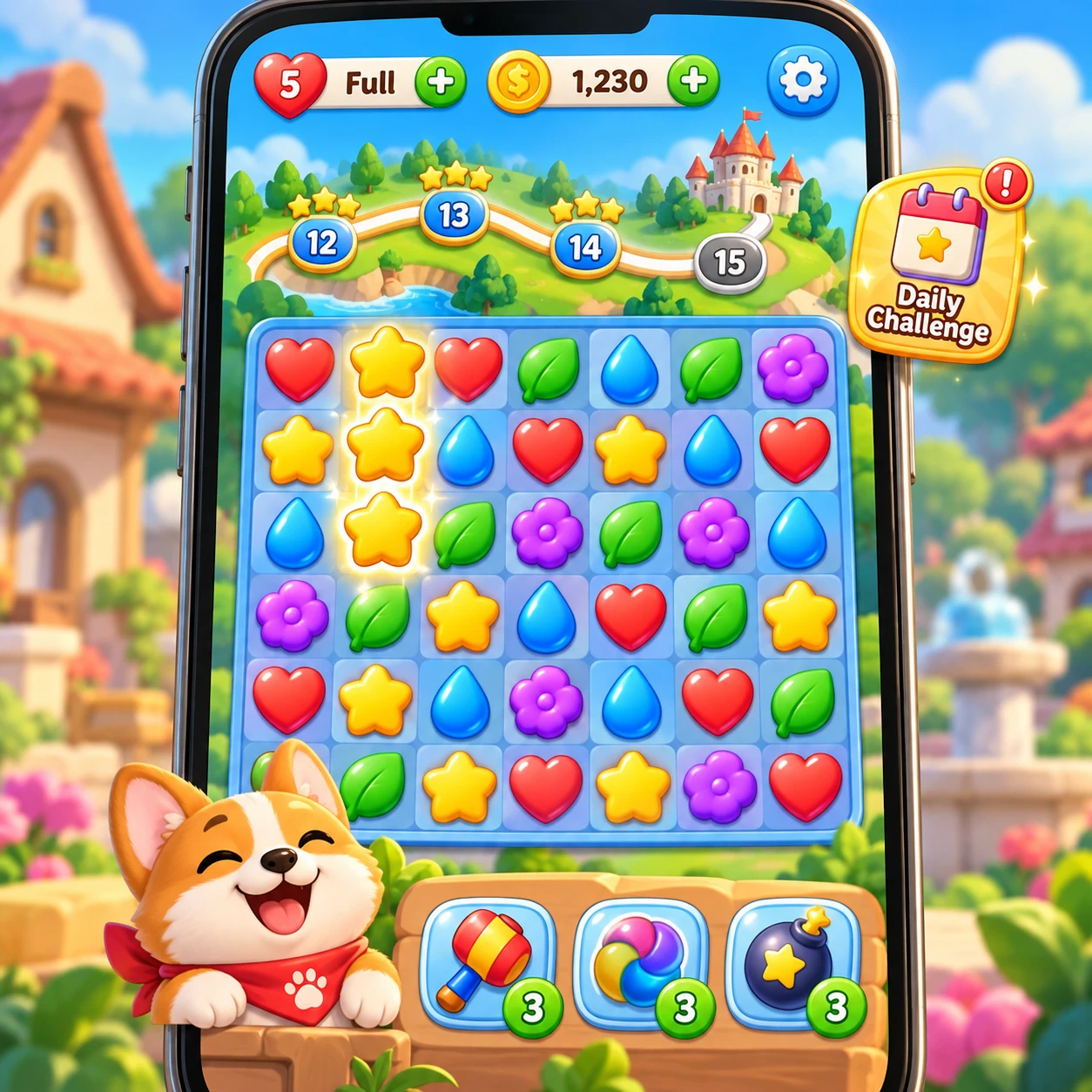
A level map can show how far someone has come. New themes, puzzle types, or optional collection items can add a sense of discovery. Achievements can celebrate different kinds of play, such as finishing a level without hints or completing a set of daily challenges. These milestones help players notice progress that might otherwise be easy to miss.
Good rewards fit the game and arrive at a sensible pace. A new board design or a small collection item can feel meaningful without changing the rules. By contrast, if the main reward is always another currency token with no clear purpose, players may stop caring. A reward should answer a simple question: What does this add to my experience?
Developers should also avoid making ordinary progress feel artificially blocked. If a player must repeat the same task many times or pay to avoid an excessive wait, rewards begin to feel compulsory. Optional goals preserve choice: a player can pursue them for extra enjoyment and still have a satisfying route through the game without completing every badge.
Balance Challenge and Accessibility
Difficulty balancing keeps casual games approachable for newcomers while giving experienced players room to improve. The aim is a fair challenge: players understand why they succeeded or failed and can see a path forward.
Early levels often teach one idea at a time. A puzzle might introduce a new obstacle, then offer a few turns to learn how it works before combining it with older mechanics. Later levels can ask players to plan ahead, but the game should explain its rules and make important information easy to see.
When someone gets stuck, helpful options can keep the experience comfortable: a hint, a chance to retry, or a level that can be revisited later. These supports are especially useful in casual games, where players may be interrupted or playing in short bursts. They should assist rather than secretly make choices for the player.
There is a trade-off in difficulty. Make every level easy, and victories can feel automatic; make progress too punishing, and a relaxing game may become a source of frustration. Developers can watch where players abandon levels and combine that data with direct feedback. A difficult level is not necessarily a flaw, but a sudden spike with unclear rules often is.
Add Variety Through Challenges and Updates
Daily challenges, live events, and updates add new goals or play patterns that can refresh familiar gameplay. They are most effective when they complement the core game rather than replace it.
A daily challenge might ask players to solve a puzzle with a limited number of moves, find a set of words, or complete a level using a particular tool. This gives a returning player a focused objective, while a weekly event can offer a themed board or a shared collection goal. Small variations are often enough; a new task does not need an entirely new game mode.
Updates can also improve the experience in quieter ways. Developers may add accessibility settings, clarify instructions, fix a frustrating level, or introduce more content for players who have finished the original set. These changes show that the game is maintained, but frequent updates are not automatically better. Poorly tested additions can disrupt a familiar routine or introduce bugs.
Time-limited events deserve care. A clear start and end date can make a challenge easy to understand; a schedule that demands daily attendance can turn a pleasant extra into pressure. Variety should widen the player’s options, not make the base game feel incomplete. Players who skip an event should still be able to enjoy the main experience.
Listen to Players and Respect Their Time
Player feedback helps developers find confusing, frustrating, or missing parts of a casual game, while time-respecting design makes it easier to enjoy on a player’s own schedule. Together, they support engagement built on trust.
Feedback can come from reviews, support messages, in-game surveys, or patterns in how people move through levels. Each source has limits: a handful of vocal players may not represent everyone, and usage data cannot explain why someone quit. Combining both gives a clearer picture. If players repeatedly ask how a power-up works and leave before using it, the tutorial may need a better explanation.
Developers can make practical improvements such as adding a pause option, saving progress automatically, reducing repetitive taps, and making reward conditions easy to understand. Short levels and flexible session lengths matter too. A player should be able to finish a round and leave without losing progress or feeling punished for stopping.
Common engagement mistakes include:
- Using pressure instead of appeal: Persistent reminders and expiring rewards can create anxiety. Keep notifications optional and explain event deadlines plainly.
- Making rewards feel mandatory: If meaningful progress depends on repeated chores, players may feel they are working rather than playing. Keep optional rewards genuinely optional.
- Changing the game without listening: New features can miss the problem players actually report. Test changes, review feedback afterward, and adjust when needed.
For players, a useful sign of thoughtful design is simple: the game tells you what is available, lets you choose, and keeps your progress safe. For developers, that means treating return visits as evidence of satisfaction, not a target to pursue at any cost.
Frequently Asked Questions
What makes a casual game engaging? A clear gameplay loop, responsive actions, visible progress, and challenges that feel fair make a casual game engaging. Players are more likely to return when each session offers enjoyment without demanding too much time.
How do rewards encourage players to keep playing? Rewards recognize effort and give players a reason to explore another level, collection, or achievement. They work best when they add enjoyment and remain optional rather than serving as a gate to basic progress.
Why is difficulty balancing important? Balanced difficulty helps new players learn while giving returning players room to improve. Clear rules and useful hints make a challenge feel fair; abrupt, unexplained difficulty spikes can drive players away.
How can updates keep a game feeling fresh? Updates can add daily challenges, themed events, new levels, or quality-of-life improvements. The best additions refresh familiar play without making players feel they must participate every day.